


Introduction
For many businesses in Shimla, the first interaction a potential customer has with the business may happen online — before they visit the store, call the business or send a WhatsApp message.
A Google search, social media profile or recommendation can lead someone to your business, but the next question is often simple:
“Can I trust this business?”
A professional website can help answer that question.
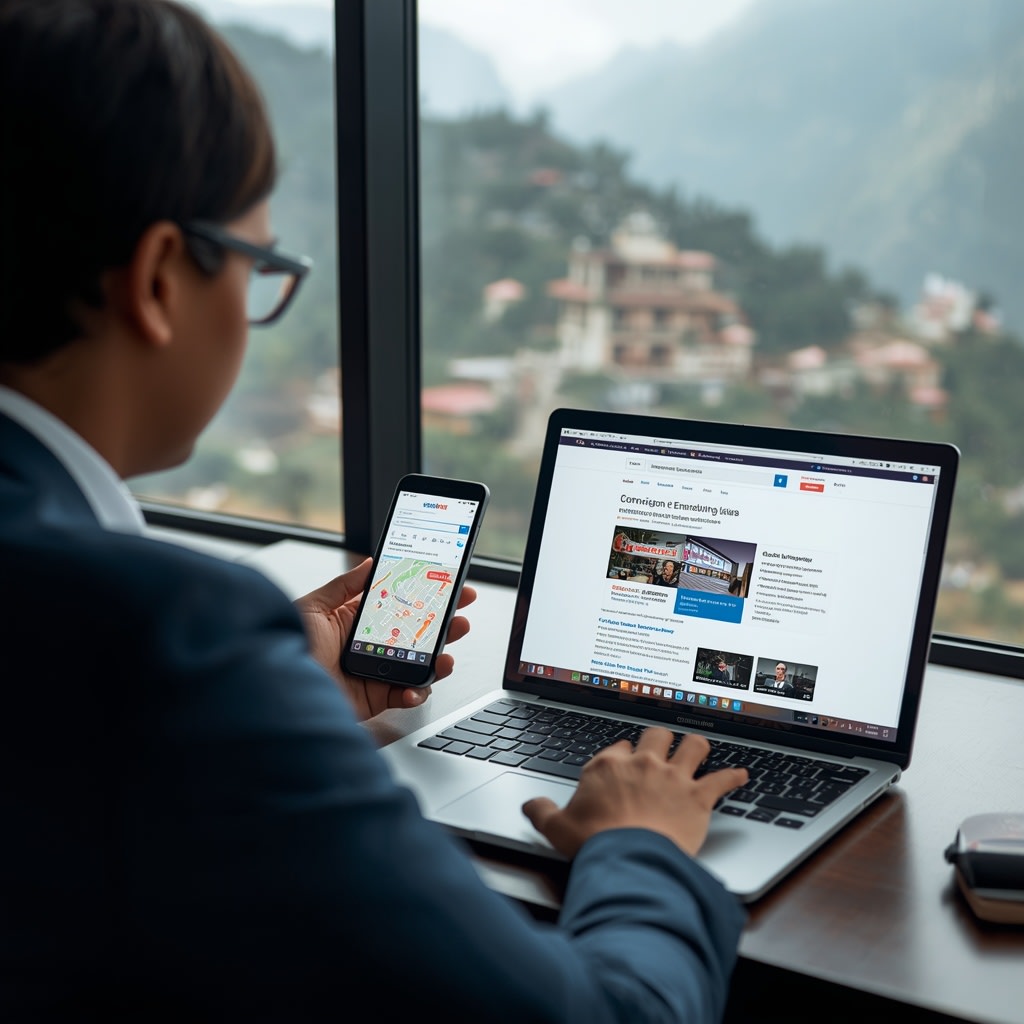
A website is not simply an online brochure. When it is planned properly, it becomes a central digital asset for your business — explaining what you offer, building credibility, helping customers find important information and giving them a clear way to contact you.
For businesses in Shimla and across Himachal Pradesh, this can be especially valuable because customers may be searching for local services, hotels, restaurants, travel companies, retailers, professionals and other businesses before making a decision.
Here are some of the most important reasons a professional website still matters in 2026.
1. Your Website Builds Trust Before the First Conversation
Imagine two businesses offering a similar service.
One has a professional website with clear services, real photos, contact information, testimonials and useful information.
The other only has an incomplete social media profile and a few scattered posts.
Even before contacting either business, most customers will form an impression.
Your website gives you an opportunity to control that first impression.
A strong business website can clearly communicate:
What your business does
Who you serve
Where you operate
What makes your business different
How customers can contact you
What previous work or experience you can demonstrate
This does not mean a website automatically makes a business trustworthy.
The website needs to be supported by accurate information, real customer experiences, clear communication and genuine business practices.
But a professional website can make it much easier for a potential customer to understand your business and take you seriously.
2. Customers Are Already Searching Online
People do not always search for a specific company name.
They may search for something like:
website developer in Shimla
digital marketing services in Shimla
bakery near me
gift shop in Shimla
travel agency in Shimla
mechanic near me
SEO services in Shimla
These searches show a different kind of intent.
The person is not simply browsing your social media content. They may already have a problem and be looking for a business that can solve it.
A properly structured website gives your business a place where those customers can learn about your services and decide whether you are relevant to them.
3. Your Website Works Beyond Business Hours
A physical business has opening and closing hours.
Your website does not.
Someone can discover your business at 11 PM, read about your services, view your work and submit an enquiry without waiting for the next morning.
That does not mean every website needs complicated automation.
Even a simple contact form, WhatsApp button, service page and clear business information can make the business easier to reach.
The important thing is that the website continues providing useful information when nobody is available to answer the phone.
4. A Professional Website Should Generate Action — Not Just Look Good
One of the biggest mistakes businesses make is treating website design as the final goal.
A beautiful website that leaves visitors wondering “What should I do next?” is not doing its job properly.
A good business website should have clear conversion paths.
Depending on the business, that could mean:
Call us
WhatsApp us
Request a quote
Book a consultation
View our services
Explore our products
Get directions
The right action depends on the business model.
A restaurant may need reservations.
A service business may need quote requests.
An e-commerce business needs a smooth shopping journey.
A travel company may need enquiry and booking forms.
The website should be designed around that real business objective.
5. Mobile Experience Matters
A large portion of modern website traffic comes from mobile devices.
That means a website cannot simply be designed for a large desktop screen and then squeezed into a phone layout.
On mobile, customers should be able to:
Read important information comfortably
Navigate without frustration
View images properly
Tap buttons easily
Contact the business quickly
Complete important forms
Browse products or services without unnecessary friction
Responsive design is therefore not just a visual feature.
It is part of the overall customer experience.

6. Your Website Can Support Local SEO
A website and Google Business Profile can work together as part of a broader local search strategy.
For example, a business serving Shimla can create useful pages that clearly explain its services, service area, contact information and expertise.
The goal should not be to repeat the phrase “Shimla” dozens of times.
Instead, the website should genuinely help someone who is looking for that service in the area.
Useful local SEO foundations can include:
Clear business information
Relevant service pages
Location-specific content where appropriate
Descriptive page titles
Useful metadata
Mobile-friendly pages
Fast performance
Internal linking
Consistent business information
A properly maintained Google Business Profile
SEO is not an instant guarantee of rankings.
It is a long-term process of making a website more useful, understandable and discoverable.
7. Your Website Gives You More Control Over Your Brand
Social media platforms are useful, but your business does not control how those platforms evolve.
Algorithms change.
Features change.
Reach can fluctuate.
Your website gives you a digital property that you control.
You decide:
How your services are presented
Which projects you showcase
How your brand looks
What information customers see
Which actions visitors can take
What content you publish
Social media can bring people toward your business.
Your website can give those people a structured place to understand the business.
8. Your Portfolio Can Prove What You Can Actually Do
For service businesses, saying “we provide professional services” is not nearly as convincing as showing the work.
A strong portfolio can demonstrate:
Previous projects
Real interfaces
Features delivered
Technologies used where relevant
Problems that were solved
Different industries served
This is particularly important for agencies, developers, designers, marketers and other professional service providers.
Instead of asking customers to simply believe your claims, you can show them evidence of your capabilities.
9. A Website Should Grow With the Business
A website should not necessarily remain exactly the same forever.
As a business grows, it may need:
New services
New products
Blog content
Case studies
Customer testimonials
Online bookings
E-commerce functionality
Lead management
Integrations
Analytics
Business automation
A well-planned technical foundation makes future improvements easier.
This is one reason it is important to think beyond the homepage when building a website.
The real question is not:
“How does the website look today?”
It is:
“Can this website continue supporting the business as it grows?”
10. What Should a Modern Business Website Include?
There is no universal checklist that every business needs.
The right structure depends on the business.
However, a professional website will often include some combination of:
Homepage
A clear introduction to the business, its value and the actions visitors can take.
Services or Products
Detailed information about what the business actually offers.
About
The story, people, experience or approach behind the business.
Portfolio or Case Studies
Real examples of previous work where appropriate.
Contact
Clear contact information and an easy way to get in touch.
FAQs
Useful answers to questions customers commonly ask.
Blog or Resources
Helpful educational content when publishing it makes sense for the business.
Location information
Relevant local information when the business serves a specific geographical area.
The important thing is not having the most pages.
It is having the right pages for the customer's journey.
11. How Much Should a Business Website Cost?
There is no single correct price for a professional website.
The cost depends on factors such as:
Number of pages
Design requirements
Content requirements
Custom functionality
E-commerce requirements
Integrations
CMS functionality
Authentication
Performance requirements
SEO requirements
Ongoing maintenance
A simple informational website and a custom business platform are completely different projects.
The right approach is to define the business requirements first and then determine the appropriate scope and budget.
12. A Website Is an Investment — But It Needs a Strategy
Buying a website does not automatically generate customers.
That is an important distinction.
A website works best when it is part of a broader digital strategy that can include:
Local SEO
Google Business Profile
Content
Social media
Advertising
Reviews
Email or WhatsApp communication
Analytics
Ongoing optimization
The website becomes the central place where these different channels can send potential customers.
Conclusion
For a business in Shimla, a professional website can be much more than an online visiting card.
It can become a place where potential customers discover your business, understand your services, evaluate your credibility and take the next step.
But the goal should never be to build a website simply because “every business needs a website.”
The better question is:
“What should this website help my business achieve?”
Once that question is clear, the design, content, technology and functionality can all be built around the answer.
If your business is ready to build or improve its digital presence, start by defining your goals, your customers and the actions you want your website to generate.
A good website is not just something customers look at.
It is something your business can actually use.